

Plate Heat Exchanger
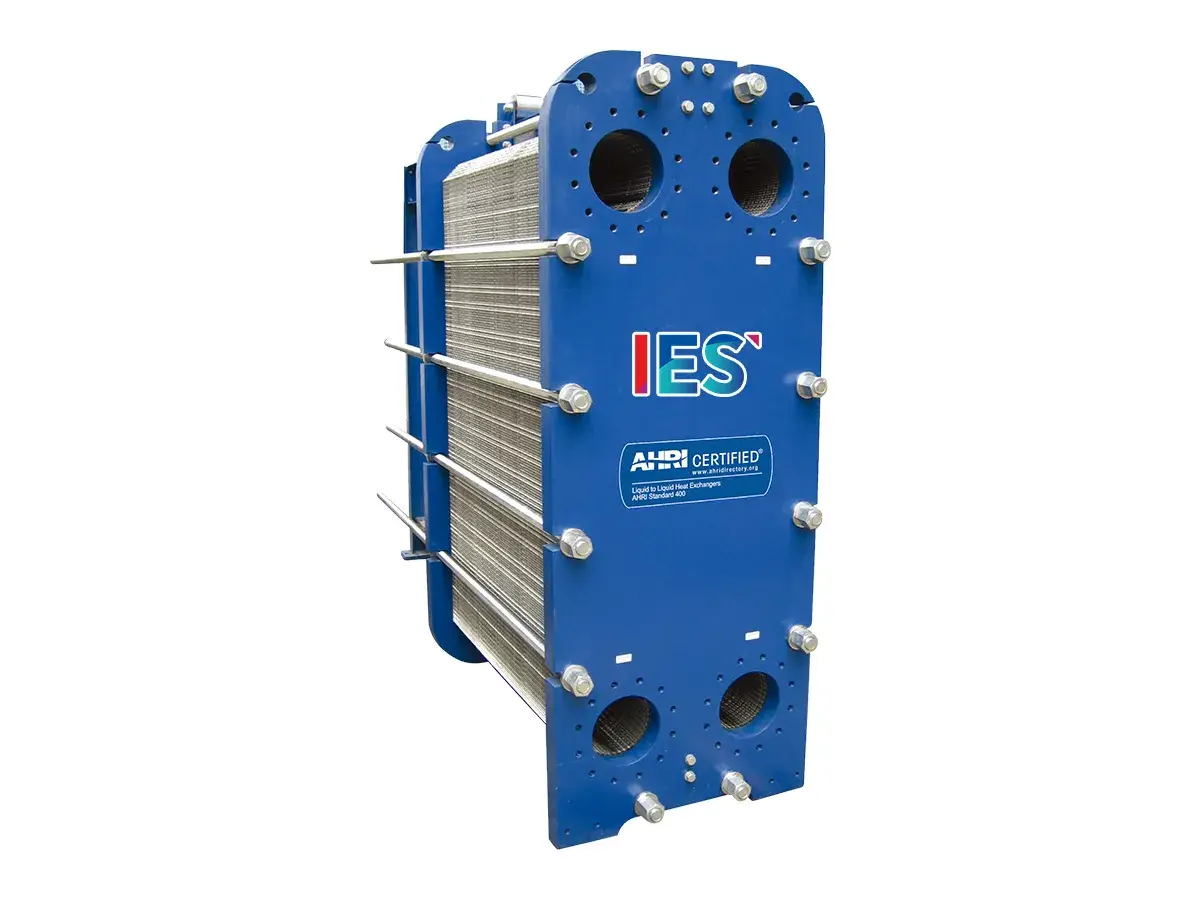
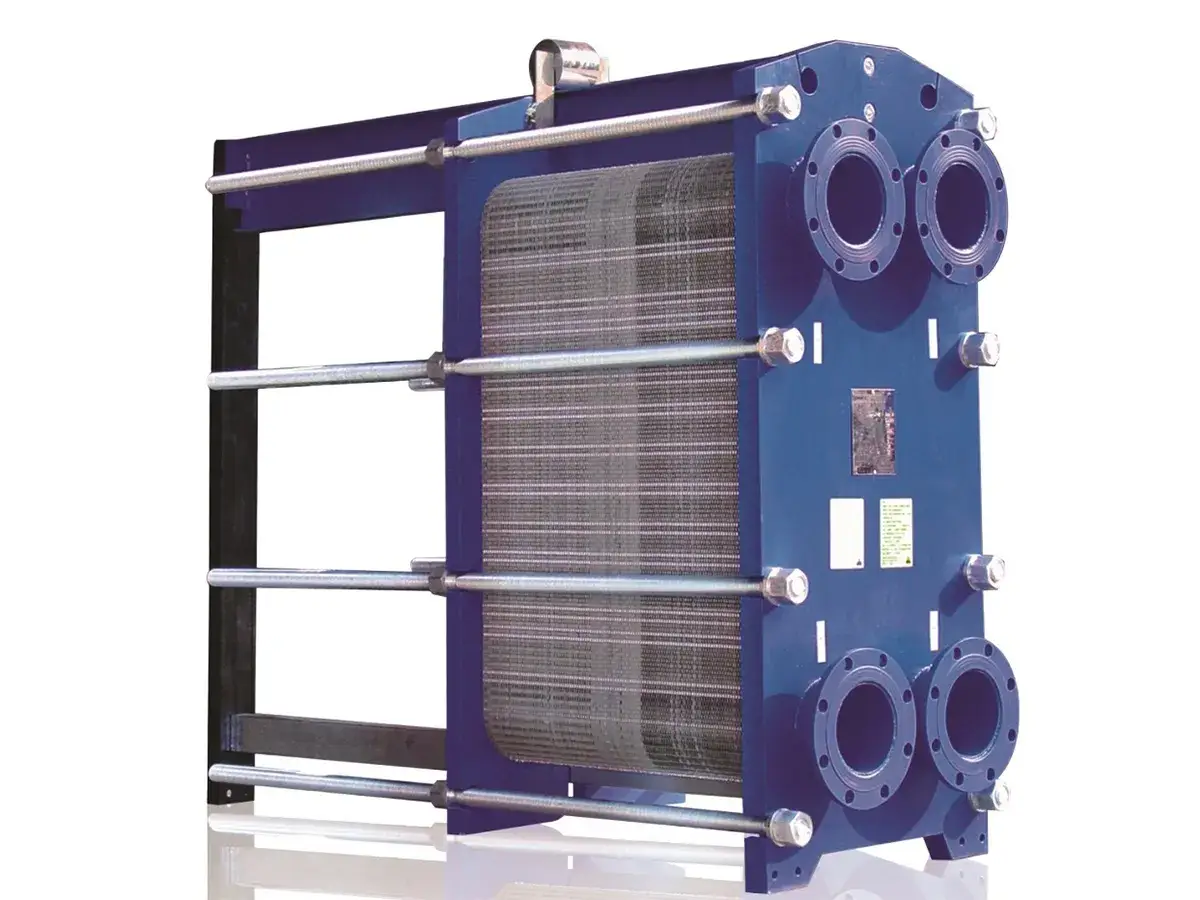
The plate heat exchanger uses a series of corrugated metal plates assembled with NBR or EPDM gaskets to transfer heat between two fluids. The specially designed plate channels create strong turbulence as fluids pass through the heat exchanger, improving heat transfer efficiency and reducing the risk of fouling.
The high-performance plate structure provides excellent thermal performance within a compact footprint. Its detachable design also simplifies inspection, cleaning, and maintenance, and is suitable for a wide range of heating and cooling systems.
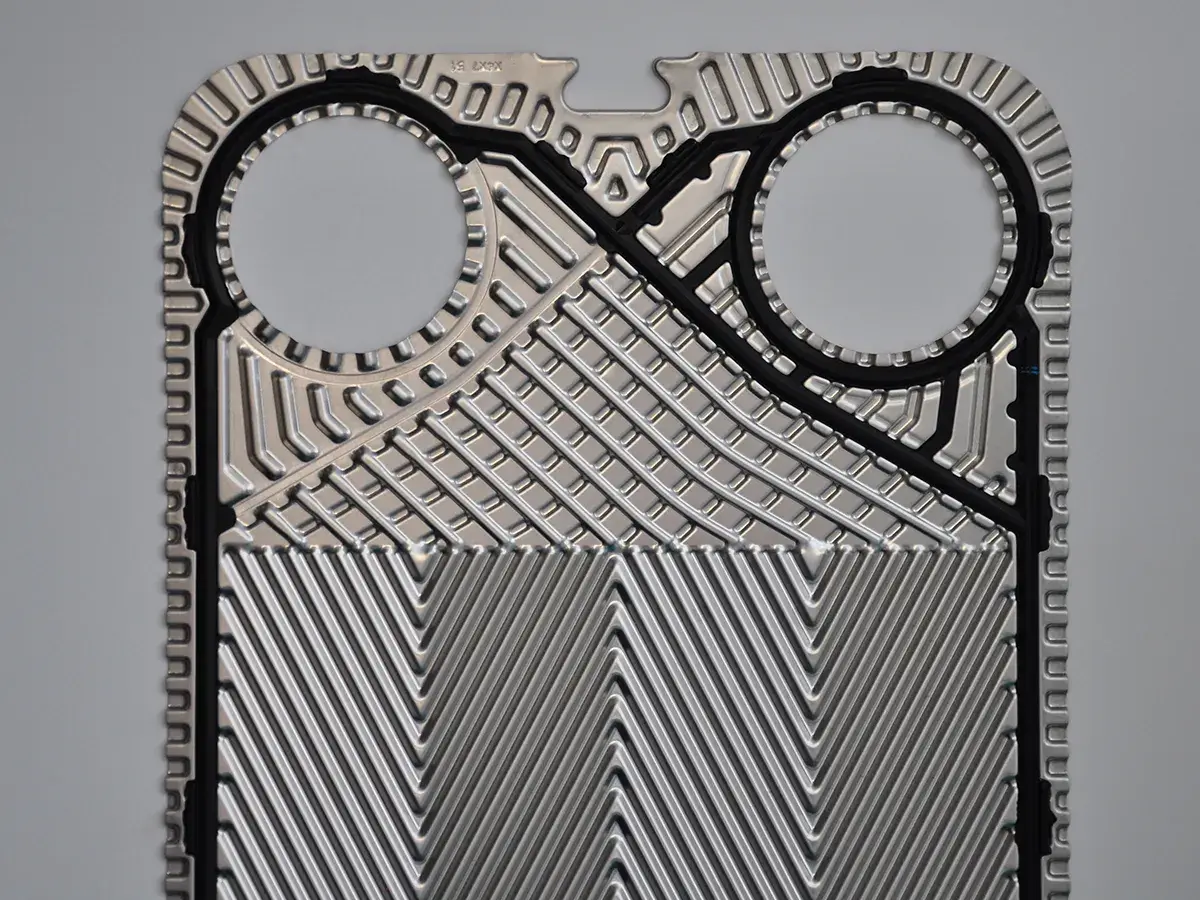
- Specially Designed Heat Transfer Plates: The unique herringbone corrugated pattern increases fluid turbulence and improves heat transfer efficiency.
- Low Temperature Difference Capability: With a minimum logarithmic mean temperature difference (LMTD) of 0.5°C, the heat exchanger adapts to various operating conditions.
- Compact Structure: The plate design achieves high heat transfer capacity within a small footprint, reducing installation space requirements.
- Easy Maintenance: The detachable structure allows convenient cleaning, inspection, and replacement of components.
- Corrosion-Resistant Materials: Heat transfer plates are available in stainless steel 304, stainless steel 316, and titanium for different fluid conditions.
- Reduced Fouling and Heat Loss: Optimized channel design helps reduce scale accumulation, pressure drop, and unnecessary heat loss.
- Flexible Capacity Expansion: Additional plates can be added to increase heat transfer capacity according to future system requirements.
- Max. Working Pressure: Up to 25 bar
- Heat Transfer Area: Up to 2,400m²
- Connection Size: DN32 to DN450
- Gasket: NBR, EPDM, FPM, Viton, Silicon
- Plate:
- Materials: Stainless steel AISI 304, Stainless steel AISI 316L, Titanium
- Thickness: 0.4–0.8 mm
- Connection Materials: Epoxy-coated carbon steel, Stainless steel, Titanium
- Frames: Mild steel with epoxy coating, Stainless steel
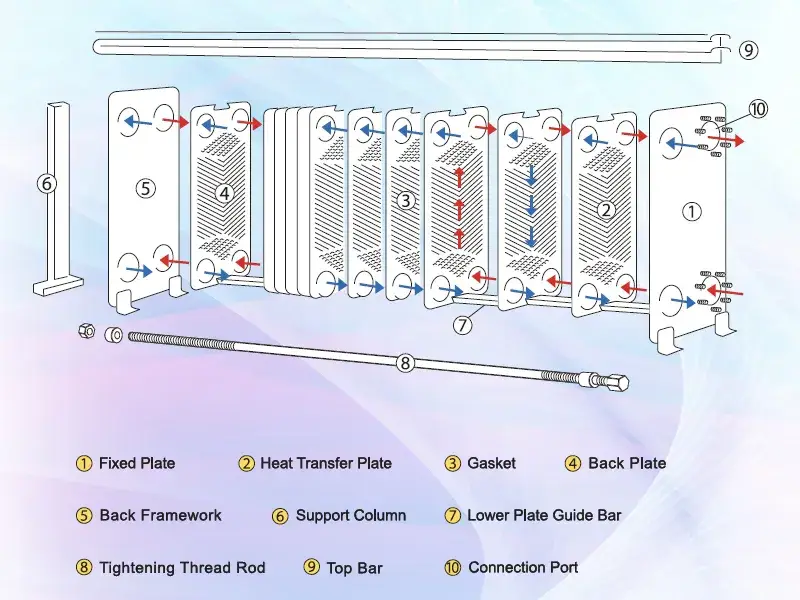
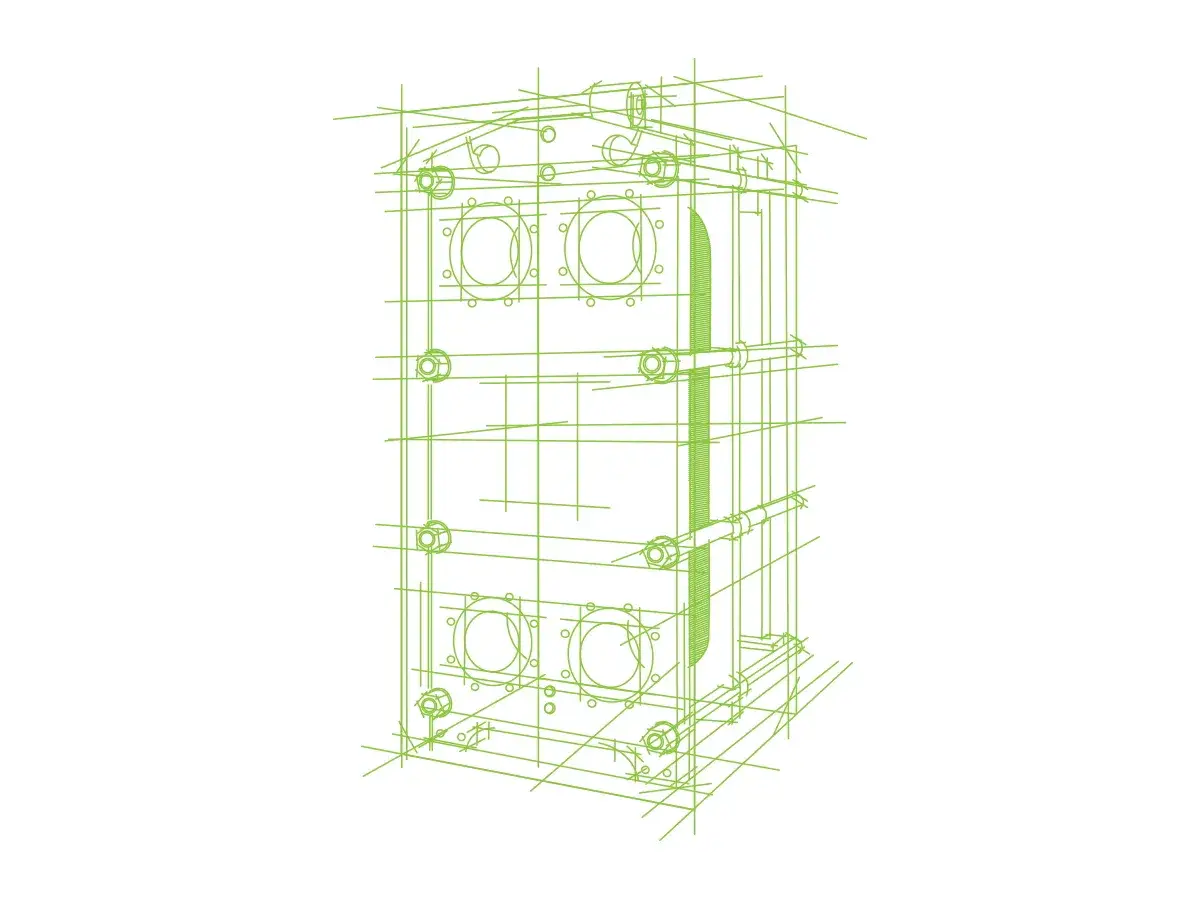
- Fixed Plate
- Heat Transfer Plate
- Gasket
- Back Plate
- Back Framework
- Support Column
- Lower Plate Guide Bar
- Tightening Thread Rod
- Top Bar
- Connection Port
IES plate heat exchangers are assembled with a series of heat transfer plates separated by gaskets, which create independent channels for hot and cold fluids. The plate pack is compressed within a rigid frame to form parallel flow channels with alternating fluid paths. The movable back plate is secured by tightening threaded rods, keeping the plate pack under proper compression. During operation, the two fluids flow through separate channels on both sides of the heat transfer plates. Heat transfers through the thin plate surface without direct contact between the fluids for an efficient thermal exchange.
- Specifications
- Reference Plate Heat Exchanger Specifications
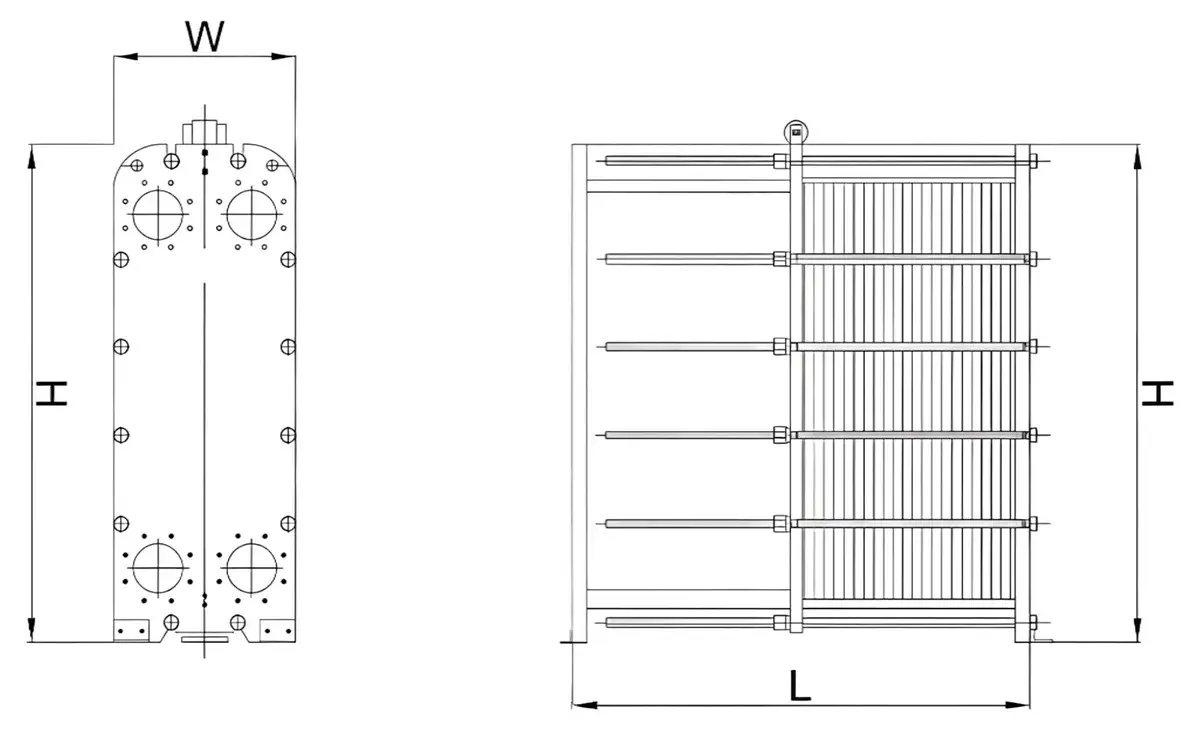
| Model | Connection Size | Max. Flow Rate | Width (W) | Height (H) | Length (L) |
| |
DN32 | 19m³/h | 200mm | 535mm | 110–520mm |
| |
DN50 | 68m³/h | 300mm | 675mm | 430–2055mm |
| |
DN50 | 68m³/h | 300mm | 995mm | 430–3045mm |
| |
DN65 | 78m³/h | 395mm | 625mm | 440–1045mm |
| |
DN65 | 78m³/h | 395mm | 945mm | 440–1045mm |
| |
DN80 | 132m³/h | 495mm | 1625mm | 435–4100mm |
| |
DN100 | 184m³/h | 495mm | 1235mm | 435–4120mm |
| |
DN100 | 184m³/h | 495mm | 1255mm | 435–4120mm |
| |
DN100 | 184m³/h | 495mm | 1905mm | 435–4130mm |
| |
DN150 | 413m³/h | 640mm | 1550mm | 1000–6000mm |
| |
DN150 | 413m³/h | 610mm | 1855mm | 675–6240mm |
| |
DN150 | 413m³/h | 640mm | 2355mm | 690–6130mm |
| |
DN150 | 413m³/h | 640mm | 1755mm | 690–6125mm |
| |
DN200 | 735m³/h | 770mm | 1466mm | 1300–4000mm |
| |
DN200 | 735m³/h | 790mm | 2100mm | 655–6075mm |
| |
DN200 | 735m³/h | 770mm | 2505mm | 655–6250mm |
| |
DN300 | 1653m³/h | 980mm | 1805mm | 675–6240mm |
| |
DN300 | 1653m³/h | 1080mm | 2175mm | 810–6270mm |
| |
DN300 | 1653m³/h | 1045mm | 2860mm | 850–6270mm |
| |
DN300 | 1653m³/h | 1050mm | 3878mm | 850–6270mm |
| |
DN350 | 1558m³/h | 1170mm | 3150mm | 1990–4390mm |
| |
DN450 | 2575m³/h | 1390mm | 3010mm | 3085–6585mm |
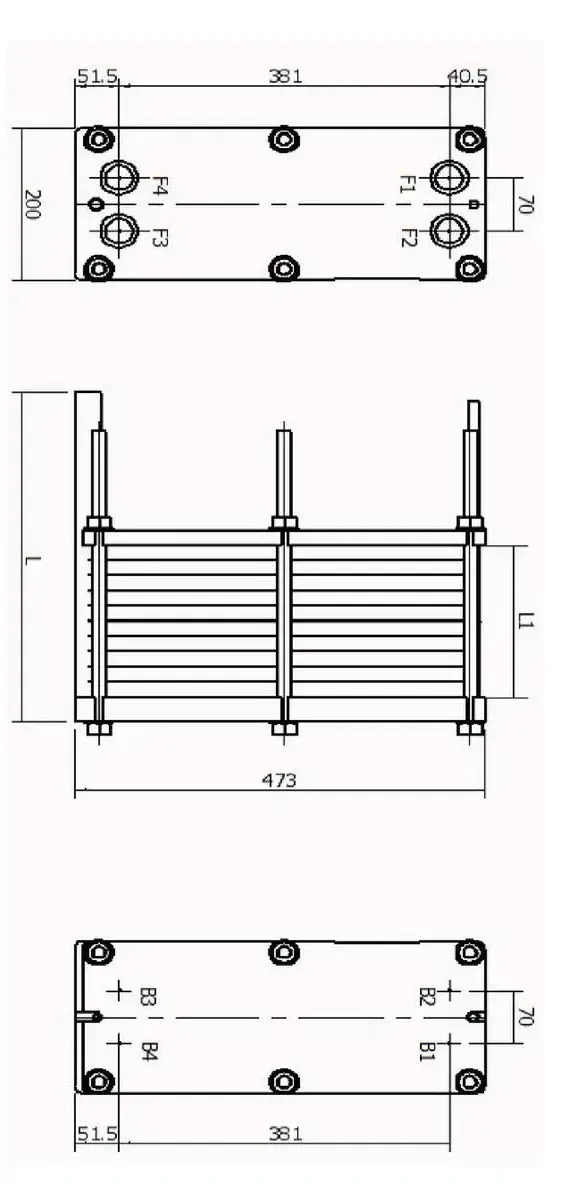
- Design pressure: 1.0 MPa
- Test pressure: 1.3 MPa
- Net weight: 50 kg
- Operating weight: 55 kg
- Frame model: IG16
- Plate material: SS316L
- Gasket material: EPDM high-temp
| Connections | Hot Side | Cold Side |
|
Connection type Connection size Material Pressure rating Inlet position Outlet position |
Threaded DN32 SS316L PN16 F1 F4 |
Threaded DN32 SS316L PN16 F3 F2 |
-
- Free sliding
- Accurate positioning
- Automatic interlocking
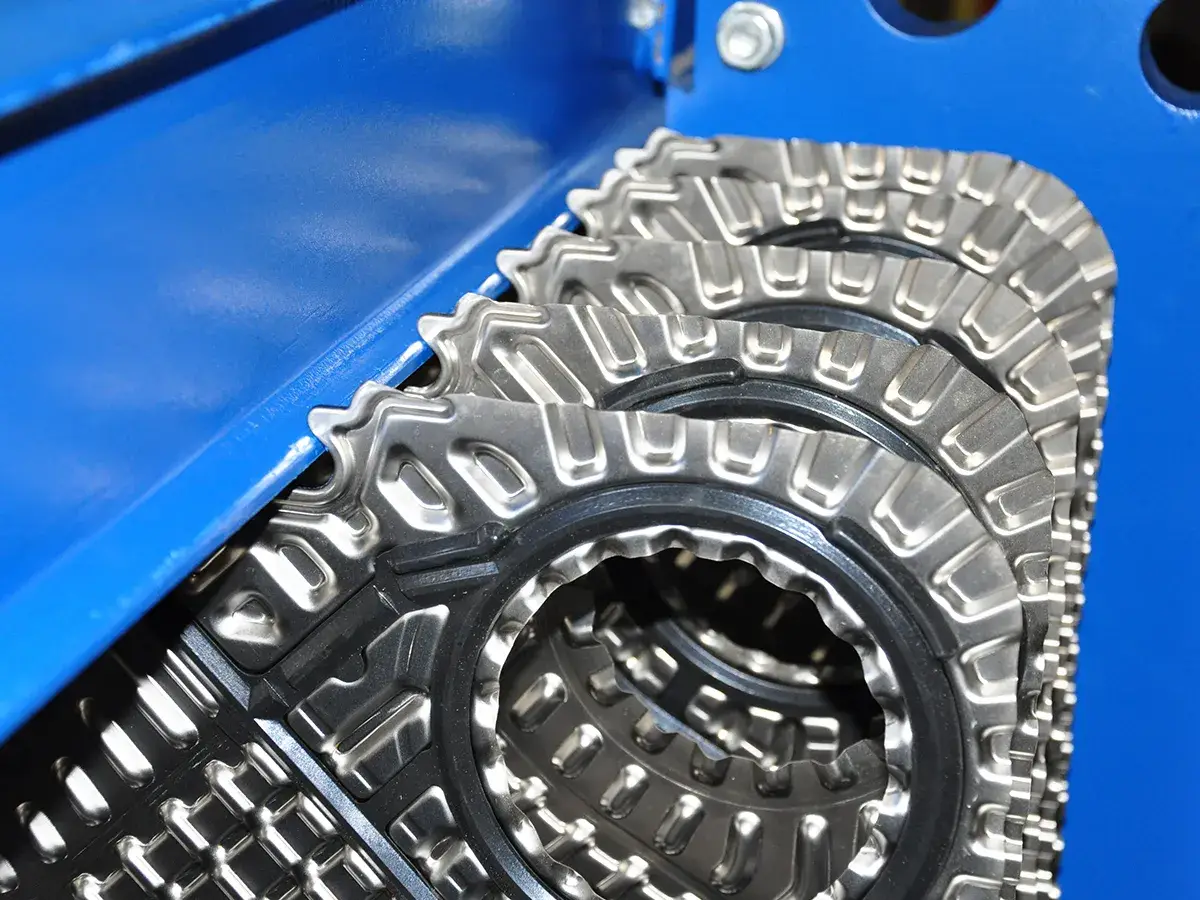 Plate Suspension Positioning & Locking System
The plates use a dovetail-shaped suspension positioning system that provides:
-
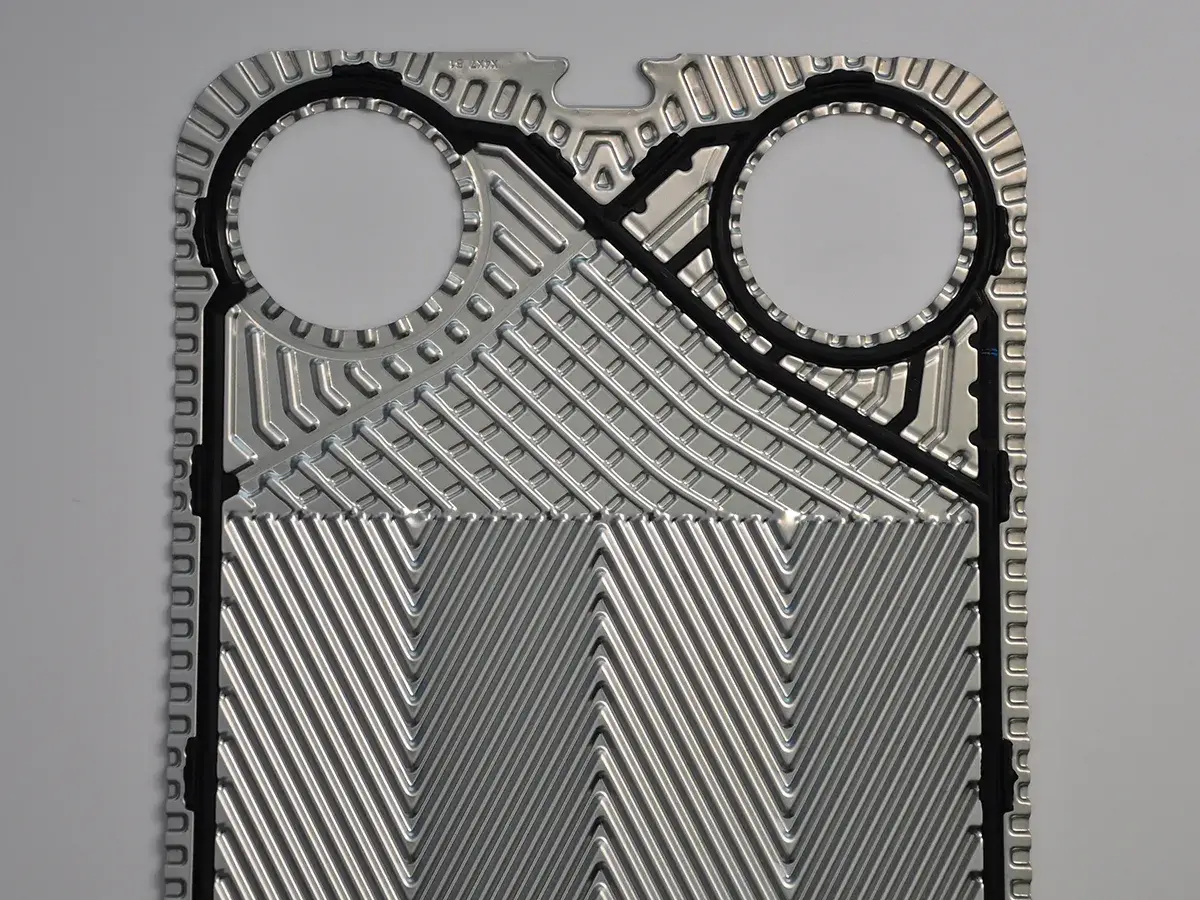 IES Detachable Plate Heat Exchangers
IES detachable plate heat exchangers are available in multiple models with different plate angle and groove depth options. The plate design includes large-angle and small-angle corrugation patterns, as well as shallow groove, deep groove, and ultra-deep groove configurations. After assembly, these options create narrow-channel and ultra-wide-channel heat exchangers to meet different flow and heat transfer requirements.
-
- Easy installation
- Convenient replacement
- Long service life
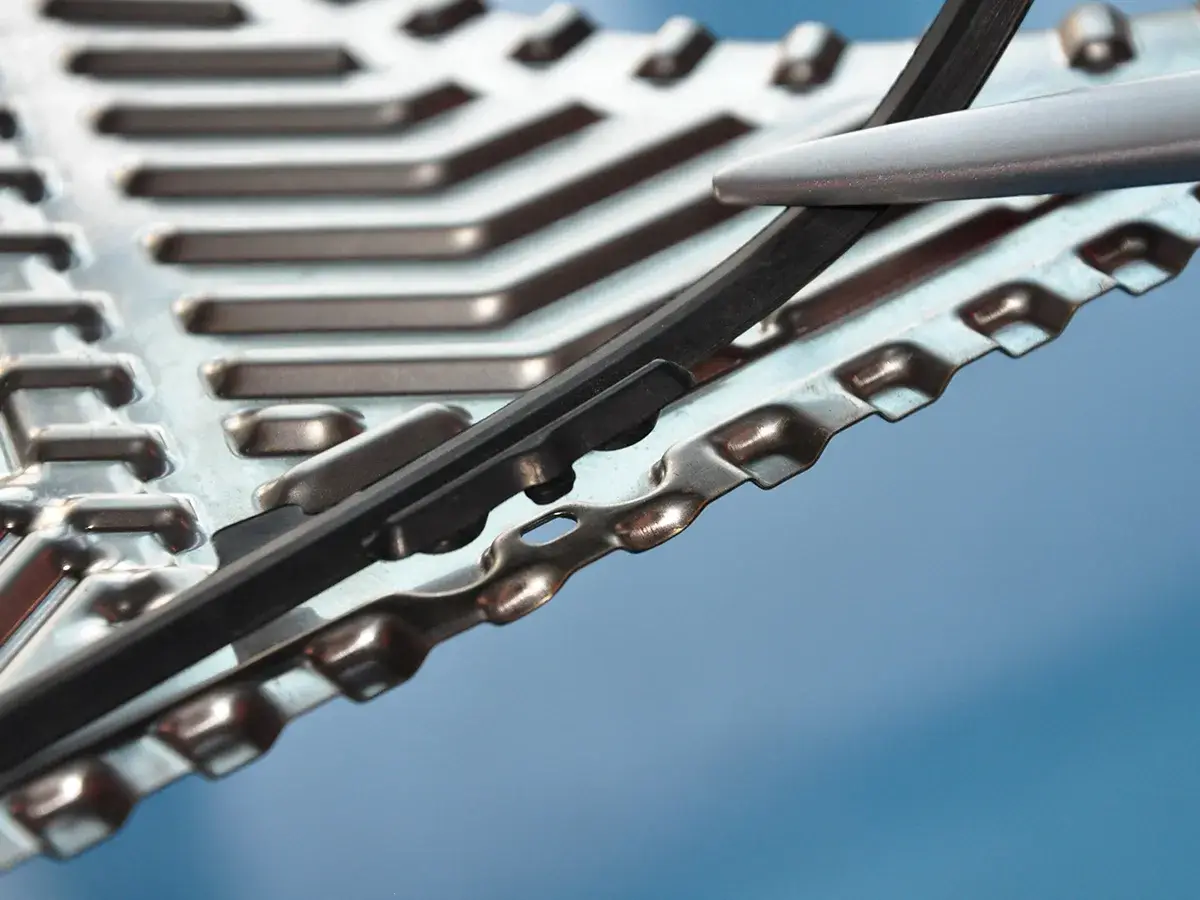 Glue-Free Design
 -
- Makes full use of the heat transfer area
- Enables uniform fluid distribution across the entire plate surface
- Minimizes pressure loss
- Reduces scaling caused by stagnant areas in the flow path
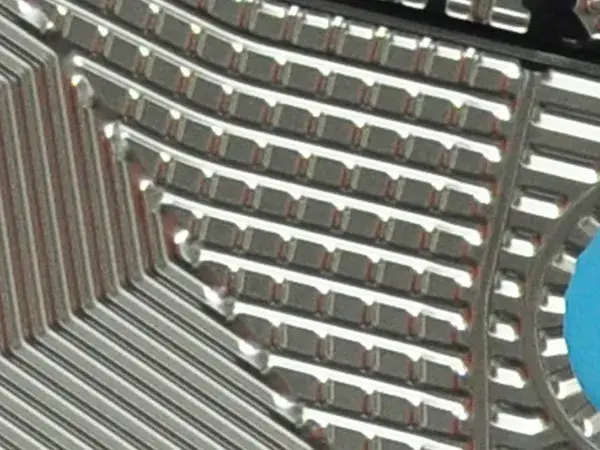 Optimized Plate Distribution
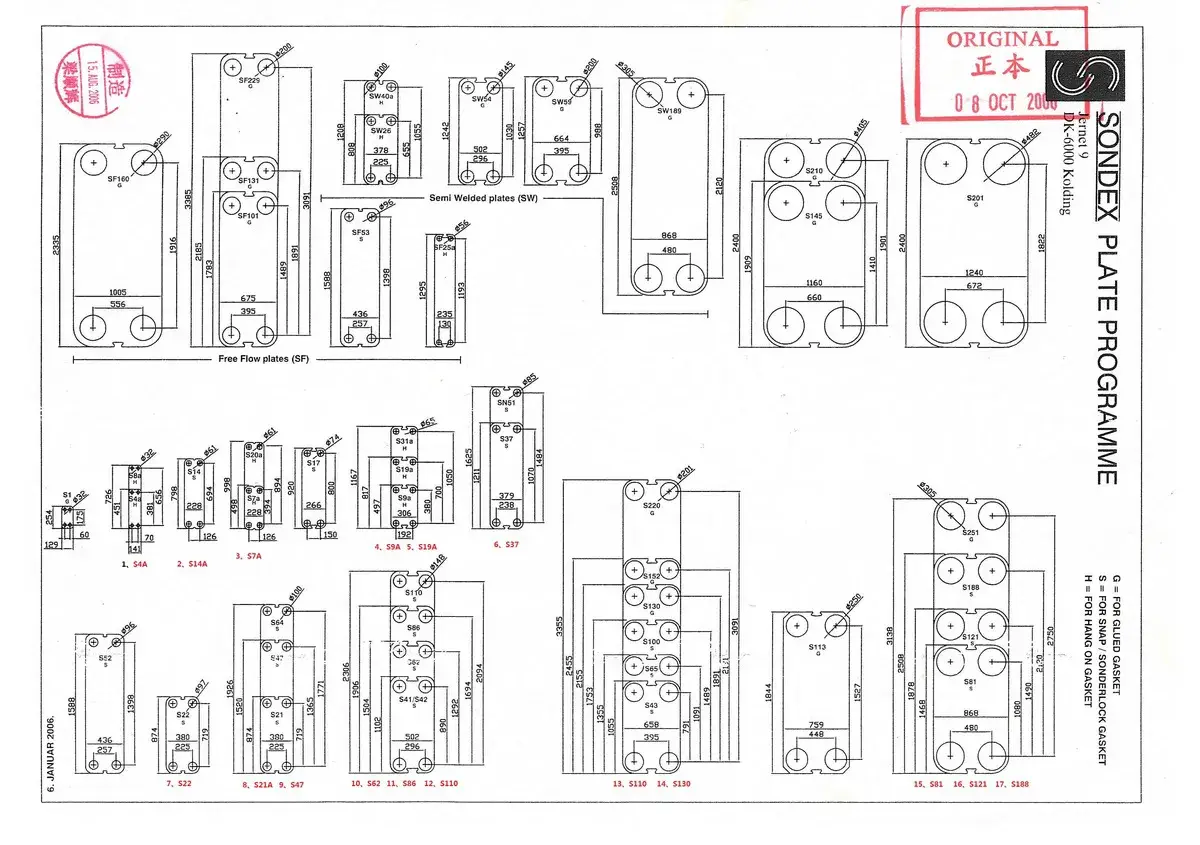 Wide Range of Plate Designs
IES detachable plate heat exchangers are available with multiple plate designs to meet different heat transfer requirements. The plate range includes large-angle and small-angle corrugation patterns, as well as shallow groove, deep groove, and ultra-deep groove designs. By combining different plate patterns and channel depths, the heat exchanger can be configured with narrow channels or ultra-wide channels to match different flow conditions and thermal requirements.
We offer a wide selection of plate types and groove depths to create customized plate heat exchanger configurations for different applications. The variety of plate combinations allows better matching between the heat exchanger and actual operating conditions.
A suitable plate configuration helps achieve effective heat transfer performance while reducing equipment cost. It also improves fluid velocity between plates, which helps reduce corrosion and scaling caused by low-flow areas.